
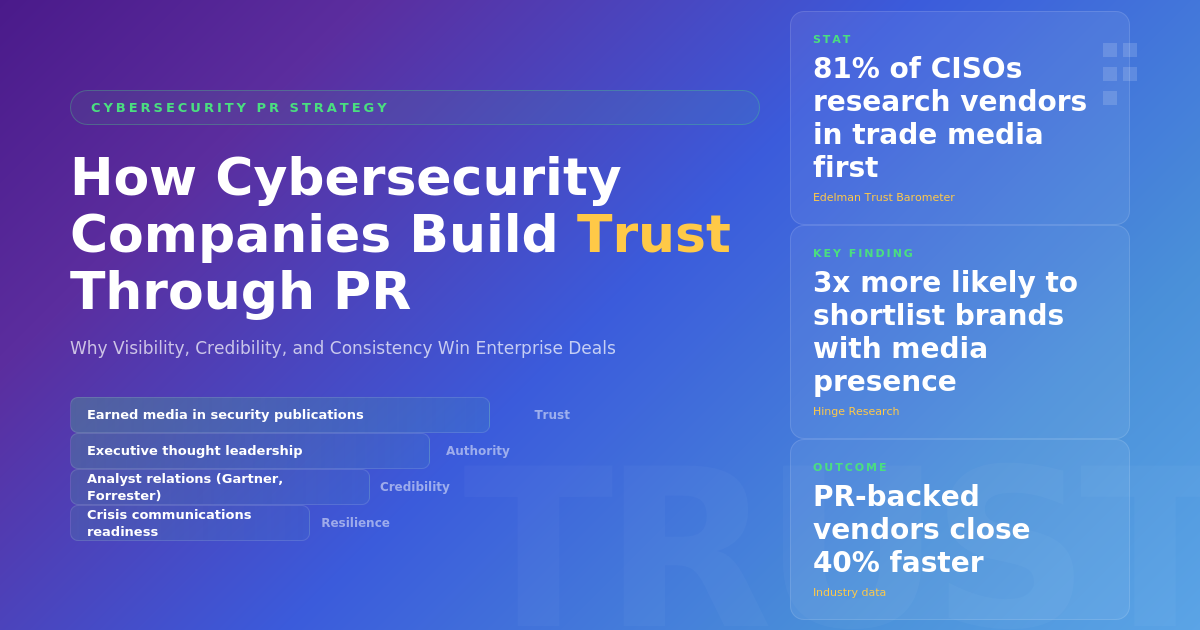
In cybersecurity, trust isn’t a nice-to-have. It’s the entire foundation your business sits on.
Your customers are trusting you with their sensitive data, their critical infrastructure, and in many cases, their company’s survival. Before they hand over that kind of responsibility, they need to believe you’re credible, capable, and here for the long haul.
And here’s what most cybersecurity companies get wrong: they think the product alone builds that trust. It doesn’t. Not in a market where hundreds of vendors make nearly identical claims about stopping ransomware, detecting zero-day vulnerabilities, and protecting cloud environments.
What separates the trusted brands from the forgotten ones? Strategic public relations.
Why Trust Is the Real Currency in Cybersecurity
Think about how a CISO or VP of Security evaluates a new vendor.
They don’t start by requesting a demo. They start by doing research. They read Dark Reading. They check what Gartner and Forrester are saying. They scan LinkedIn to see if your executives are contributing anything meaningful to the industry conversation. They ask peers at conferences like RSA Conference and Black Hat whether they’ve heard of you.
If your brand doesn’t show up in any of those places, you don’t exist to them. And if you don’t exist, they certainly don’t trust you.
Public relations is the engine that puts your company into those conversations before a buyer ever hits your website.
Five PR Strategies That Build Real Trust
1. Earn Media Coverage in the Publications Your Buyers Read
Getting a feature in a general business outlet is great. But for cybersecurity companies, the real credibility comes from showing up in the places where security leaders spend their time. Publications like SC Media, SecurityWeek, CRN, Cyber Defense Magazine, TechTarget, and Infosecurity Magazine carry weight with technical buyers in ways that a lifestyle blog never will.
A strong cybersecurity PR agency knows which journalists cover your space, what stories they’re hungry for, and how to position your company as the source they call first.
At AceIt Agency, our media relations team has secured placements in Forbes, TechCrunch, Bloomberg, Wired, VentureBeat, and dozens of trade publications across the technology landscape. That same muscle gets applied to every cybersecurity client engagement. Learn more about our approach.
2. Build a Thought Leadership Engine Around Your Executives
CISOs and security analysts follow people, not logos. If your CEO, CTO, or head of threat research is publishing insightful commentary on AI-driven threats, regulatory compliance shifts, or emerging attack vectors, your entire company benefits from that halo of credibility.
Thought leadership isn’t just writing a blog post. It’s placing bylines in industry publications. It’s securing speaking slots at RSAC and Black Hat. It’s being the expert journalists quote when a major data breach makes headlines.
We help cybersecurity executives build this kind of visibility as part of every engagement. It’s one of the most powerful trust-building tools in your arsenal. Here’s how we approach executive visibility.
3. Invest in Analyst Relations Early
If Gartner, Forrester, or IDC doesn’t know who you are, you’re at a massive disadvantage in enterprise sales cycles. Analyst relations is one of the most overlooked trust-building strategies in cybersecurity PR, and it’s one of the most impactful.
We help clients prepare for analyst briefings, develop materials that communicate differentiation clearly, and maintain ongoing relationships that improve your positioning in market evaluations like the Gartner Magic Quadrant and Forrester Wave.
4. Have a Crisis Communications Plan Before You Need One
Nothing destroys trust faster than a botched response to a cyber incident. And nothing builds trust faster than a company that handles a crisis with transparency and speed.
The best cybersecurity companies don’t wait until a data breach happens to figure out their communications strategy. They build crisis communications playbooks, train their spokespeople, and establish protocols for rapid response.
If you’re a security vendor and you can’t manage your own crisis communications, why would anyone trust you to protect theirs? We’ve written extensively about this in our guide on cybersecurity crisis communications. And our crisis PR team stands ready to help you build that plan.
5. Let Your PR and Content Work Together
Trust isn’t built in a single touchpoint. It’s built over time, across multiple channels. When your earned media placements, your blog content, your social media presence, and your SEO strategy all tell the same story, buyers start to feel like they know you.
That’s why we integrate PR with SEO and content marketing at AceIt Agency. Every media placement feeds your search visibility. Every piece of content reinforces the narratives we’re placing in the press. It’s a compounding effect that generic PR agencies miss entirely.
The Bottom Line
In the cybersecurity market, trust is earned through consistency, visibility, and credibility. Strategic PR is how you build all three at scale.
If your company is doing meaningful work in endpoint security, cloud security, threat intelligence, Zero Trust, or any other corner of the security industry, the right PR partner can make the difference between being considered and being invisible.
Talk to us about building trust for your cybersecurity brand.
Related reading: