
You’ve spent months, maybe years, building a product. The design is right. The pricing makes sense. The supply chain is locked in. Now comes the part that most brands underestimate: getting people to care.
The truth is, the market is more crowded than it’s ever been. Consumers are exposed to thousands of brand messages every single day. A new product launch without a strategic PR plan behind it is basically launching into a void. You might get a few likes. You might sell a few units. But you won’t build the kind of momentum that turns a launch into a business.
This guide walks through how the best consumer PR agencies help brands launch products successfully, and what you can apply to your own strategy.
Why PR Matters More Than Ever for Product Launches
Here’s what’s changed. Ten years ago, you could launch a consumer product with a press release, a few ad dollars, and hope for the best. Today, consumers are skeptical of advertising, overwhelmed by choice, and trained to look for social proof before spending a dollar.
Public relations fills that gap. It puts your product in front of consumers through channels they actually trust: editorial features, product reviews, influencer recommendations, and stories in publications with real credibility. When Forbes writes about your product, that carries weight that no Facebook ad can match.
More than that, PR creates the narrative context around your launch. It tells consumers why your product matters, not just what it does. And in a market where consumers buy stories as much as they buy products, that narrative is everything.
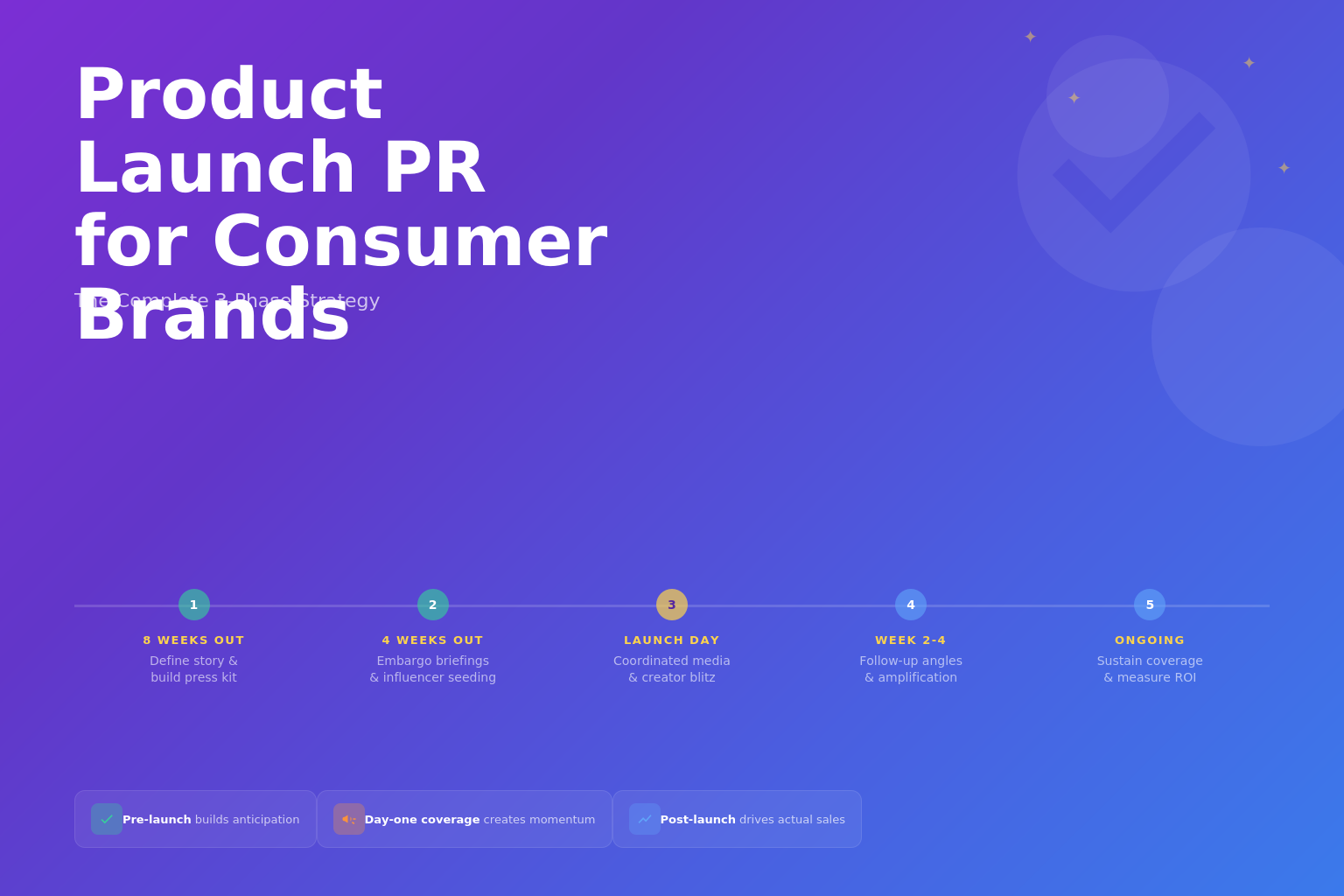
Phase 1: Pre-Launch (4 to 8 Weeks Before Launch Day)
The most important work in product launch PR happens before anyone outside your company even knows the product exists.
Define your product story. Before you pitch anyone, you need to know exactly what makes this product worth covering. Not the features list. The story. What problem does it solve? Who is it for? What’s different about it? Why now? The best PR campaigns are built on a narrative that feels fresh, timely, and relevant to what’s happening in culture. If you can’t explain why a journalist should care in two sentences, you’re not ready to pitch.
Identify your target media and creators. Not every outlet matters for your product. A smart consumer PR strategy starts by mapping exactly which publications, journalists, bloggers, and influencers reach your target buyer. If you’re launching a new kitchen gadget, you want food and lifestyle editors. If it’s a fitness wearable, you want health and tech reviewers. Precision matters more than volume.
Build your press materials. This includes a press release, product photography, key messaging, founder or executive talking points, and a product fact sheet. Make it easy for journalists to write about you. The less work they have to do, the more likely they are to cover your launch.
Start your outreach early. Offer embargoed briefings to key journalists 3 to 4 weeks before launch. This gives them time to test your product, write a thorough review, and publish on launch day. Send product samples for hands-on reviews. Coordinate with influencers for seeding campaigns so their content goes live in sync with your media push.
Phase 2: Launch Day
Launch day is not a single press release hitting the wire. It’s a coordinated event where every channel fires together.
Media coverage should go live. If you’ve seeded properly, reviews and features should publish on day one. Time these to coordinate with your owned channels: social media posts, email blasts, website updates, and any paid amplification.
Influencer content should drop. If your influencer partners have been seeded with product, their posts, stories, and videos should publish in sync with your media coverage. This creates the feeling that your product is everywhere at once, which is exactly the kind of momentum that drives consumer action.
Be ready for reactive media. A strong launch generates inbound interest from journalists who saw the initial coverage and want to cover the story from a different angle. Have your team ready to respond quickly, provide additional information, and facilitate follow-up interviews.
Phase 3: Post-Launch (Weeks 2 Through 8)
Most brands treat launch day as the finish line. The best brands treat it as the starting gun.
Sustain the coverage drumbeat. Pitch new angles and follow-up stories. Share early sales data or customer response numbers. Pitch “behind the product” stories that give journalists a deeper look at the founders, the design process, or the mission behind the brand.
Amplify earned media. Take every piece of media coverage and repurpose it across your own channels. Share articles on social media. Feature press logos on your website. Include media quotes in your email marketing. This extends the life and value of every placement.
Monitor and adjust. Track which outlets drove the most traffic. Which influencer posts generated the most engagement. What messaging resonated and what fell flat. Feed these insights back into your ongoing PR strategy so every subsequent launch gets sharper.
Common Mistakes That Kill Product Launches
Launching without a story. Features don’t get coverage. Stories get coverage. If your pitch is just “we made a new thing,” you’ll get ignored.
Pitching too late. Most major publications work on editorial calendars weeks or months in advance. If you’re reaching out to journalists the day before your launch, you’ve already lost.
Relying only on paid media. Ads create awareness. Earned media creates trust. You need both, but launching without any earned component means you’re paying for every eyeball and getting none of the credibility.
Ignoring the post-launch period. The first wave of coverage creates awareness. The sustained effort after launch is what drives actual sales and long-term brand building.
Choosing influencers based on follower count. A creator with 500,000 followers and no alignment with your product will underperform a creator with 20,000 followers whose audience is your exact target buyer. Smart consumer PR is about relevance, not reach.
A Real-World Example
When AceIt Agency worked with Temu on their U.S. market breakthrough, the strategy wasn’t about a single launch moment. It was about sustained, strategic PR and organic media placements that built momentum over time. The result: over 500 million in audience reach and more than 100 million brand impressions, all through earned media. No paid placements. No shortcuts. Just the kind of relentless, strategic media work that builds real consumer awareness.
What to Look for in a Product Launch PR Partner
If you’re considering hiring a consumer PR agency for your next launch, here’s what to look for:
They should have real media relationships, not just a media database subscription. They should understand your category and your consumer. They should be able to show you specific results from past launches, not just a list of logos. And they should be able to explain their process clearly, because great PR isn’t magic. It’s strategy plus execution plus relentless follow-through.
If you’re curious about how earned media drives actual e-commerce conversions, we’ve covered that in depth. And if you’re a DTC brand specifically, you should read our piece on why every DTC brand needs a consumer PR strategy.